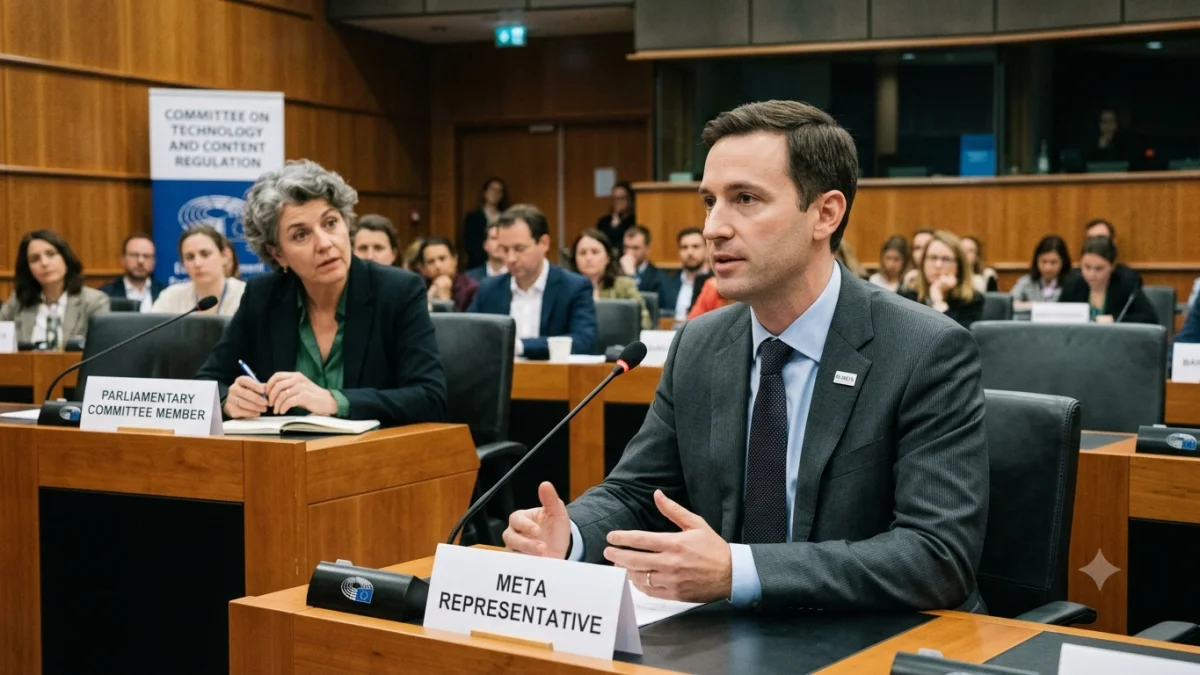


Meta is facing renewed parliamentary scrutiny over its content moderation practices, placing the social media company's decision-making processes under fresh political examination at a time when governments are demanding greater transparency from major digital platforms. The latest questioning reflects a broader shift in how lawmakers increasingly view content moderation not simply as a private business function but as an issue with implications for democratic debate, public safety and regulatory accountability.
The significance of the latest parliamentary intervention extends beyond the specific complaints under review. Legislatures in multiple jurisdictions have progressively moved from debating whether online platforms should moderate harmful content to asking how moderation decisions are made, whether automated systems operate fairly, and what level of public oversight is appropriate. Those questions have become more prominent as Meta relies increasingly on artificial intelligence to identify and act against content across Facebook and Instagram while maintaining that human reviewers continue to oversee the most sensitive decisions.


Parliamentary inquiries typically focus on several recurring issues: the transparency of recommendation algorithms, the consistency of enforcement decisions, appeals processes for users, and whether moderation systems inadvertently suppress lawful political expression. These concerns have intensified as governments seek assurances that technology companies are applying their own policies consistently while complying with national laws governing online content.
Meta has long argued that moderating billions of posts across multiple languages requires a combination of automated detection systems, human reviewers and clearly defined community standards. The company has also pointed to its independent Oversight Board as an additional mechanism for reviewing difficult moderation decisions. Nevertheless, critics across the political spectrum continue to question whether the company's systems adequately balance safety, freedom of expression and transparency, particularly when automated enforcement affects political speech or news content.
The parliamentary questions also emerge against a backdrop of expanding regulation of large online platforms. In the European Union, the Digital Services Act has established new obligations for very large online platforms, including requirements related to systemic risk mitigation, transparency and researcher access. The European Commission has already opened proceedings examining aspects of Meta's compliance with those obligations, while continuing to request additional information about recommender systems and risk-management measures.
The regulatory trend is not confined to Europe. Governments in Asia and elsewhere have similarly demanded greater visibility into platform operations. Earlier this year, Indonesian Communications and Digital Affairs Minister Meutya Hafid publicly called on Meta to provide greater transparency regarding its algorithms and content moderation processes, arguing that digital platforms operating at large scale should demonstrate compliance with national regulations governing harmful content and online safety.
Academic research has reinforced many of the issues now being debated in legislatures. Studies examining platform transparency have found that while new disclosure mechanisms provide unprecedented volumes of moderation data, they do not necessarily reveal whether enforcement becomes more effective during periods of heightened political sensitivity. Researchers have argued that greater transparency alone does not automatically resolve questions about consistency, accountability or the real-world effectiveness of moderation systems.
Other research has highlighted the inherent trade-offs involved in content moderation. Automated systems can identify harmful material at enormous scale and speed, but they also risk false positives that remove legitimate content or restrict lawful speech. Conversely, slower human review may reduce erroneous removals but cannot realistically keep pace with the volume of material uploaded daily to global platforms. These competing pressures help explain why debates over moderation have increasingly shifted from whether platforms should intervene to how those interventions should be governed and independently scrutinized.
For Meta, parliamentary questioning carries implications beyond immediate political criticism. Greater legislative attention can influence future regulatory requirements, reporting obligations and expectations surrounding algorithmic accountability. Investors, advertisers and civil society organizations also closely monitor such proceedings because they may signal changes in regulatory risk or compliance costs for one of the world's largest social media companies.
The latest scrutiny likewise illustrates the increasingly international character of digital platform governance. Although the specific parliamentary questions arise within individual jurisdictions, similar concerns about transparency, algorithmic accountability and content moderation standards are emerging across multiple democracies. As a result, Meta faces overlapping expectations from lawmakers, regulators and users who often seek different—and sometimes conflicting—approaches to balancing online safety, free expression and platform responsibility.
The current position remains one of active parliamentary and regulatory oversight rather than concluded findings. Lawmakers continue to seek explanations from Meta regarding the operation of its moderation systems, while regulators in several jurisdictions are separately monitoring compliance with applicable digital platform rules. The outcome of those inquiries, any additional regulatory measures, and Meta's responses to requests for greater transparency remain the principal developments being officially monitored.