

LONDON — Oil prices were little changed on Monday as markets weighed prospects for an agreement to reopen the Strait of Hormuz against Iran’s insistence that Washington meet conditions before unrestricted shipping can resume.
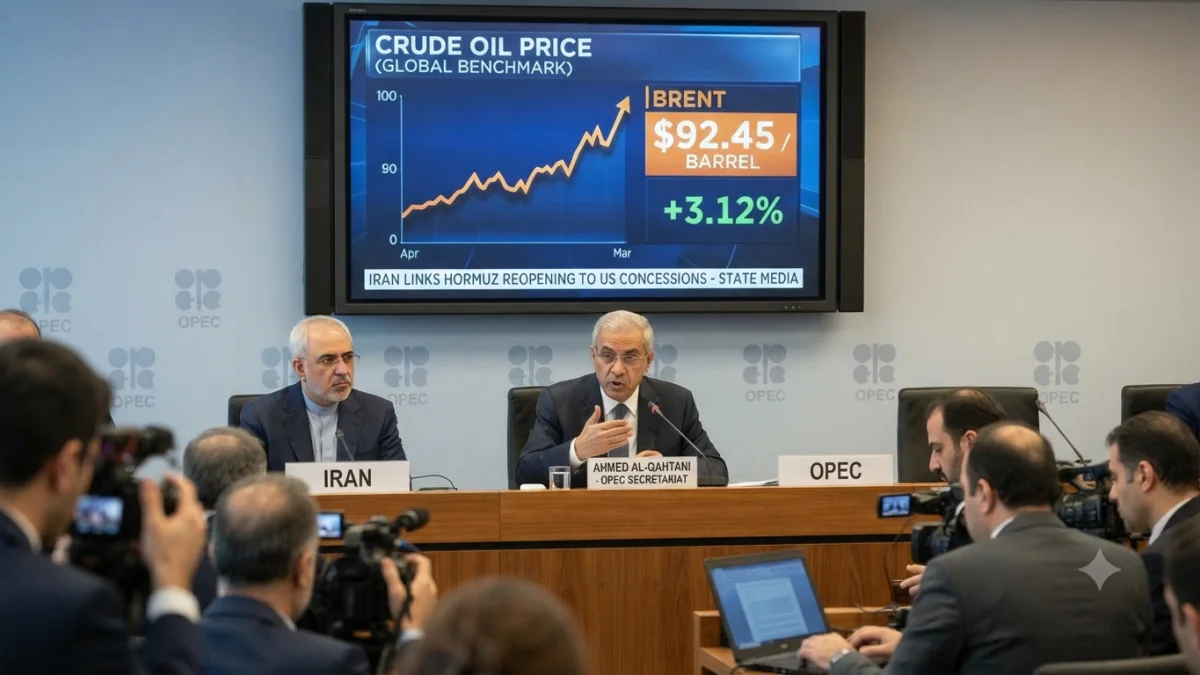
Brent crude futures were up 19 cents at $83.74 a barrel by 0807 GMT, while U.S. West Texas Intermediate crude futures gained 3 cents to $78.21. Both benchmarks had fallen more than 7% last week as expectations grew that Iran and Oman were nearing an arrangement to restore traffic through the strategic waterway.


Iran said on Sunday that a deal with Oman was in its final stages, but Foreign Minister Abbas Araqchi said Tehran and Washington were not currently engaged in direct negotiations. He said Iran would not begin talks while Washington was, in Tehran’s view, violating an interim agreement reached in June.
The comments tempered expectations of a rapid reopening. Iran has said the waterway would reopen only after the United States met additional conditions, including compensation for what Tehran describes as extensive U.S. attacks on Iran.
The Strait of Hormuz is a critical route for global energy supplies. Before the conflict that began in late February, it carried about one-fifth of the world's oil and liquefied natural gas shipments. Restrictions on traffic have therefore kept a significant geopolitical risk premium in energy prices even as traders respond to signs of diplomatic progress.
Supply concerns were reinforced by developments elsewhere in the region. Iran-aligned Houthi forces said they had struck Saudi Aramco’s Jazan refinery on Sunday. Separately, Abu Dhabi National Oil Company said on Friday that 15 of its vessels had been attacked while transiting the Strait of Hormuz since the conflict began. Those claims add to uncertainty over the safety of commercial shipping, although individual incidents and their circumstances remain subject to verification.
Oil markets have responded sharply to changing expectations over the negotiations. Prices declined last week as traders anticipated that a reopening could restore disrupted flows and reduce supply risks. The latest Iranian statements have limited further declines by keeping uncertainty over the timing and conditions of any reopening.
For now, markets remain focused on whether the discussions involving Iran and Oman produce an arrangement that allows commercial shipping to resume. No final agreement to restore unrestricted passage had been announced as of Monday morning.