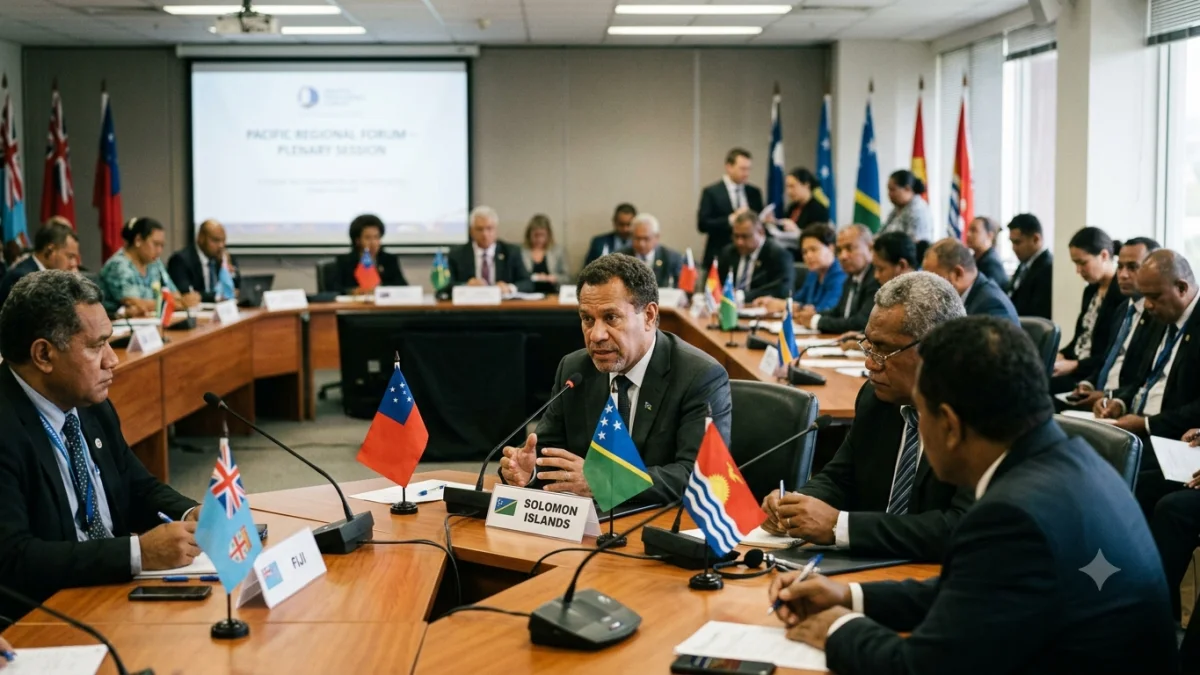


SUVA — Foreign ministers from Pacific island nations failed to reach agreement on a joint statement condemning China's recent ballistic missile test, exposing divisions within the region over how to respond to Beijing's growing strategic presence in the Pacific ahead of a leaders' summit later this month.
The proposed statement followed China's July 6 launch of a long-range ballistic missile from a nuclear-powered submarine into the Pacific Ocean, which Beijing said was a routine military exercise conducted in accordance with international law. Several Pacific governments and regional partners have described the test as destabilizing and raised concerns over its impact on regional security.


Diplomats meeting in Suva sought to craft a common response but were unable to achieve the consensus required for a Pacific Islands Forum communique. New Zealand Foreign Minister Winston Peters said two member states declined to support the proposed wording, preventing agreement on a statement specifically addressing the missile launch. He did not formally identify the countries, although officials familiar with the discussions said Kiribati and Nauru opposed the draft.
Australian Foreign Minister Penny Wong said most Forum members had expressed concern over the missile test and reiterated Canberra's position that the launch had heightened regional security concerns. She said Pacific nations wanted the region to remain peaceful and free from escalating strategic competition among major powers.
China has maintained that the missile launch formed part of routine military training and was not directed at any specific country. Beijing has previously said relevant parties were notified in advance and urged other governments not to overinterpret the exercise.
The disagreement highlighted differing approaches among Pacific states toward China, whose diplomatic, economic and security engagement has expanded significantly across the region in recent years. Several island nations maintain close political and development ties with Beijing, while others have voiced stronger concerns about increasing military activity in the Pacific.
The missile test prompted criticism last month from leaders including Solomon Islands Prime Minister Matthew Wale, who said no country should use the Pacific as a testing ground for long-range missiles, while emphasizing that the appeal applied to all major powers. Australia and New Zealand also lodged diplomatic objections following the launch.
Forum officials said ministers would continue consultations before Pacific Islands Forum leaders gather in Palau later in August, where regional security and the bloc's response to the missile test are expected to remain on the agenda.