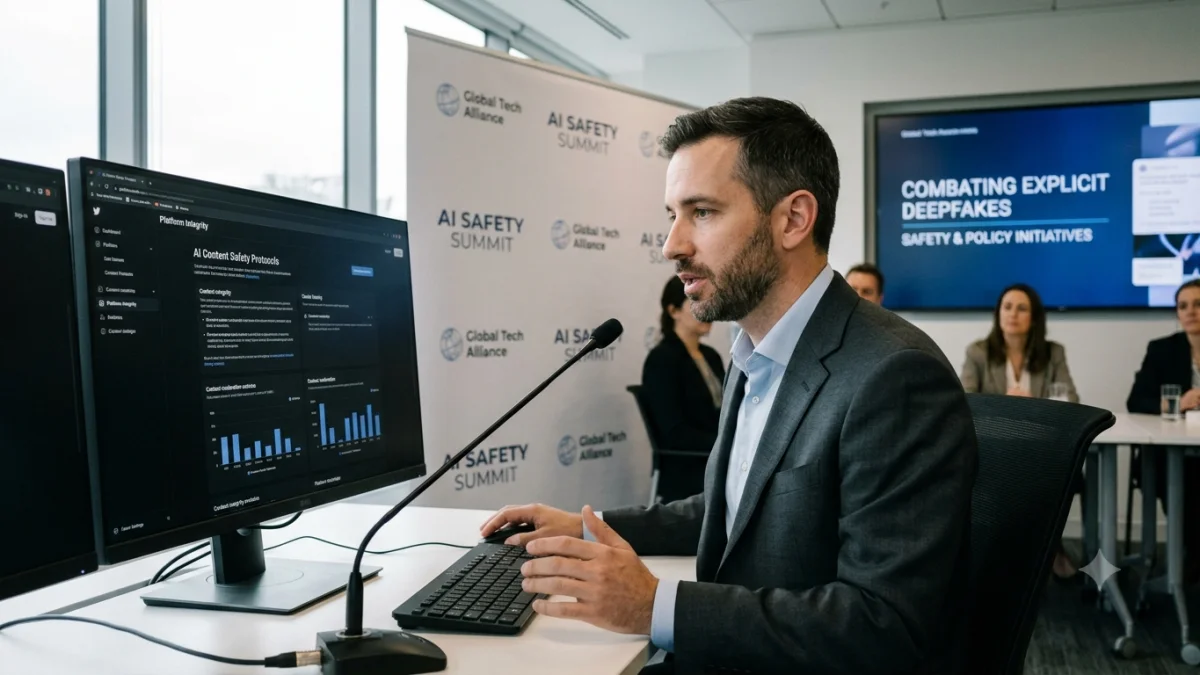


WASHINGTON — Governments, regulators and technology platforms have stepped up efforts to curb the spread of non-consensual explicit deepfake content online, as concerns grow over the misuse of artificial intelligence tools to create realistic sexualized images and videos without a subject’s consent.
The renewed focus comes amid a series of legislative, regulatory and enforcement actions in the United States, Europe and other jurisdictions during the past year. Authorities and advocacy groups have warned that increasingly accessible AI tools have made it easier to generate explicit content using photographs of private individuals, celebrities and minors. Recent surveys and research have also highlighted the growing prevalence of such material online.


In the United States, enforcement of the federal TAKE IT DOWN Act has intensified since implementation measures took effect. The law requires covered online platforms to provide mechanisms for victims to request the removal of non-consensual intimate imagery, including AI-generated deepfakes, and mandates prompt action following valid requests. Federal authorities have also issued warnings to operators of so-called “nudification” services that create fake explicit images from ordinary photographs.
Meanwhile, lawmakers continue to consider additional measures addressing digital impersonation and unauthorized AI-generated likenesses. A Senate committee this week was scheduled to vote on the proposed NO FAKES Act, legislation aimed at strengthening protections against the unauthorized use of a person's image, voice or likeness through artificial intelligence technologies.
In Britain, communications regulator Ofcom has accelerated implementation of measures designed to reduce the circulation of illegal intimate images online. The regulator said technology companies should deploy automated detection systems, including hash-matching tools, to identify and block the sharing of non-consensual intimate images and explicit deepfakes. Ofcom said the measures are intended to provide stronger protections, particularly for women and girls.
“Given the urgent need for better online protections for women and girls,” Ofcom said in a statement announcing the accelerated timeline, platforms should expand the use of proactive detection technologies to prevent illegal content from reaching users.
Several countries have also advanced broader legislation targeting AI-enabled abuse. In Ireland, lawmakers recently backed a bill that would criminalize the unauthorized use of a person’s image or voice with intent to deceive or cause harm. The Philippines has approved legislation expanding online child-protection measures to include AI-generated and digitally manipulated content involving children.
Technology companies have generally said they support efforts to combat harmful content, though some have raised concerns about implementation challenges, privacy issues and the effectiveness of age-verification requirements. Victim advocates, meanwhile, have called for stronger enforcement and faster content removal processes.
As of Thursday, regulators in several jurisdictions were continuing consultations on additional safeguards, while lawmakers weighed further measures aimed at limiting the creation and distribution of explicit deepfake content online.