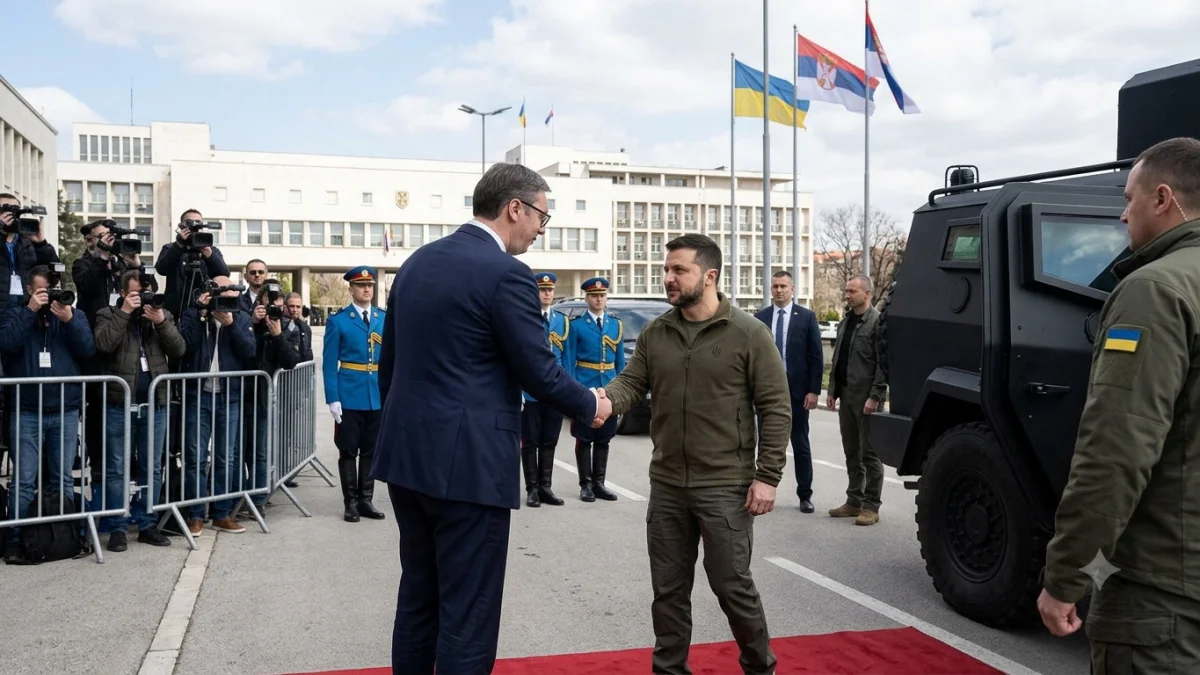


BELGRADE — Ukrainian President Volodymyr Zelenskyy is scheduled to make his first official visit to Serbia on Saturday, a diplomatic step that underscores Kyiv's efforts to deepen ties with a Balkan country that has maintained friendly relations with Russia while expanding contacts with Ukraine.
Serbian President Aleksandar Vučić announced the visit, which would be the first by Zelenskyy since taking office in 2019 and since Russia launched its full-scale invasion of Ukraine in 2022.


The trip comes as Serbia continues to balance its long-standing political and cultural ties with Moscow against its ambition to join the European Union and its growing engagement with Kyiv. Belgrade has refused to join Western sanctions against Russia, citing national interests, historical ties and energy dependence, but has repeatedly affirmed support for Ukraine's territorial integrity and provided humanitarian assistance.
According to Serbian officials, the leaders are expected to discuss bilateral cooperation and regional issues. Serbian authorities have also expressed interest in participating in Ukraine's future reconstruction efforts.
The visit follows months of increased diplomatic contacts between the two countries. In May, Zelenskyy and Vučić held a telephone conversation focused on strengthening bilateral relations and expanding economic cooperation, including discussions on resuming negotiations over a free trade agreement. A planned visit by Zelenskyy earlier this year was postponed, although a senior Ukrainian delegation later traveled to Belgrade.
The two presidents also met in Kyiv in July during the Ukraine–Southeast Europe Summit, where Vučić joined other regional leaders in discussions on security cooperation and support for Ukraine. Zelenskyy subsequently held bilateral talks with the Serbian leader, thanking Serbia for its engagement and emphasizing the importance of closer partnerships with Southeast European countries.
Serbia's relationship with Russia has come under increased scrutiny since the start of the war. While Belgrade has maintained that it will not impose sanctions on Moscow, Russia has previously accused Serbia of allowing Serbian-made weapons to reach Ukraine through third countries. Serbian officials have denied directly supplying arms to either side in the conflict while acknowledging that they cannot control the final destination of exports once sold abroad.
Analysts say the visit reflects continued efforts by both governments to strengthen pragmatic cooperation despite Serbia's complex foreign policy position. For Kyiv, engagement with Belgrade represents an opportunity to broaden diplomatic support in Southeast Europe, while Serbia continues to pursue a policy aimed at preserving relations with both the European Union and Russia.