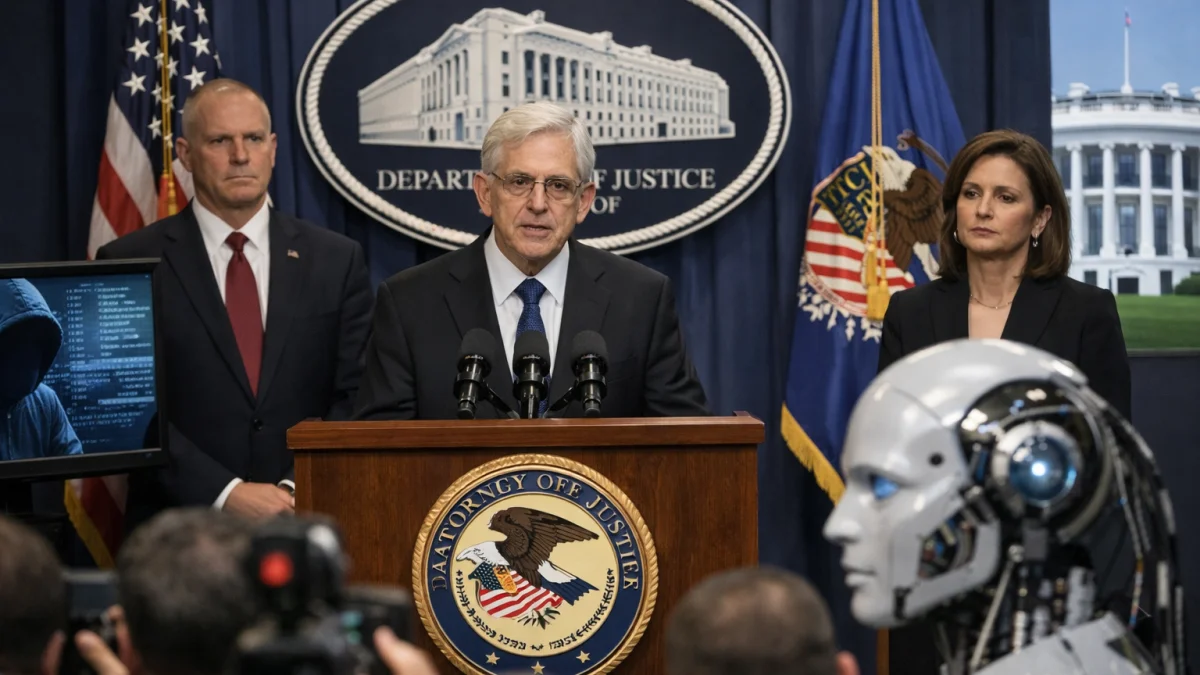


WASHINGTON — The White House issued an executive order on June 2 directing the Department of Justice to prioritize prosecution of crimes involving the use of artificial intelligence, administration officials said.
The order, titled “Promoting Advanced Artificial Intelligence Innovation and Security,” instructs Attorney General to focus enforcement efforts on federal statutes including the Computer Fraud and Abuse Act (18 U.S.C. 1030), wire fraud (18 U.S.C. 1343) and identity-related fraud laws against individuals who utilize AI to illegally access or damage computer systems, or to further other criminal activity.


It specifically covers breaches of public or private information technology systems and the use of AI agents to unlawfully access data that is subsequently used for criminal purposes, according to the text of the order.
The directive forms part of a broader effort to strengthen cybersecurity defenses amid advancing AI capabilities while promoting innovation. The order also addresses voluntary benchmarking for frontier AI models and enhancements to federal cyber defenses.
President Donald Trump signed the measure following reports of AI systems’ potential to identify and exploit vulnerabilities at scale. It directs federal agencies to accelerate hiring of cybersecurity specialists and establishes a cybersecurity clearinghouse for vulnerability information sharing.
“The Attorney General shall prioritize the enforcement of ... applicable Federal criminal laws against anyone who utilizes AI to illegally access or damage a computer without authorization,” the order states.
The action comes as concerns grow over AI-enabled cyber threats. Industry groups have welcomed the focus on enforcement against malicious actors while emphasizing the need to avoid overly burdensome regulations on legitimate AI development.
No new criminal statutes are created by the order, which instead prioritizes application of existing laws to AI-assisted offenses. Details on specific implementation timelines or resource allocations for the DOJ prioritization were not immediately detailed in public releases.
As of mid-June, the Department of Justice had not issued further guidance on the enforcement priorities outlined in the executive order. Officials indicated ongoing coordination with other agencies on related cybersecurity initiatives. The order takes effect immediately upon issuance.