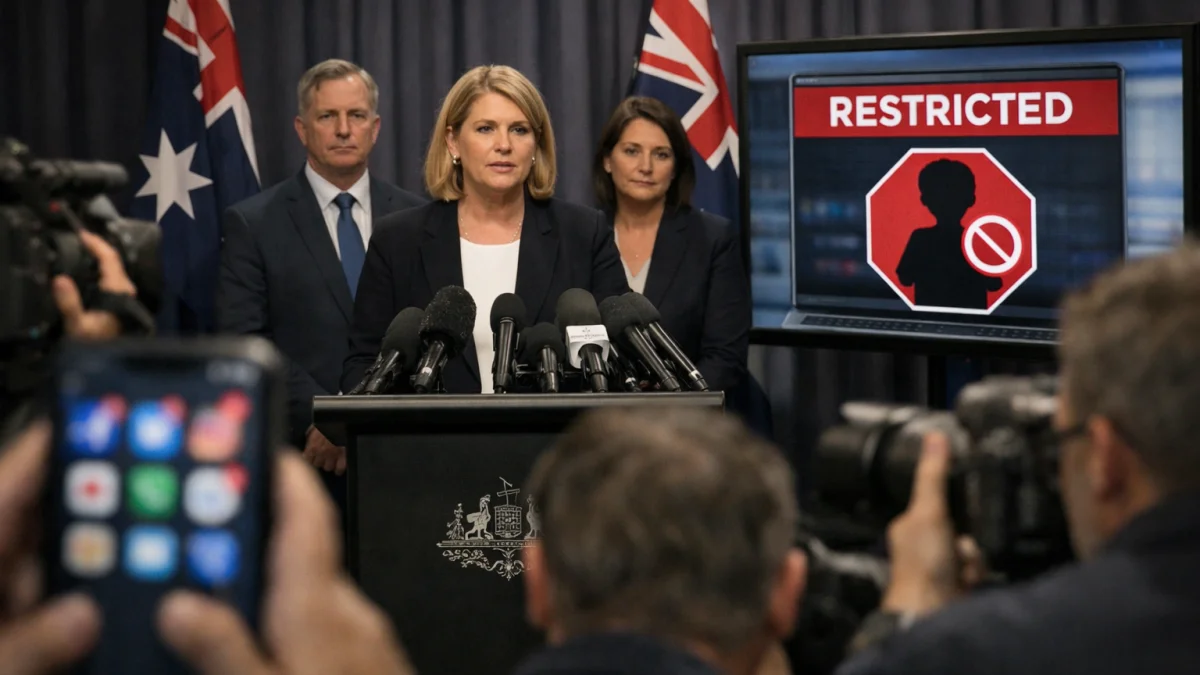


CANBERRA — The Australian government is considering tougher enforcement measures for its world-first law banning social media use by children under 16, officials said on Friday.
Prime Minister Anthony Albanese confirmed the federal government is examining ways to strengthen the Online Safety Amendment (Social Media Minimum Age) Act 2024 amid concerns over compliance and the power of technology platforms. The law, which took effect on Dec. 10, 2025, requires age-restricted social media platforms to take reasonable steps to prevent Australians under 16 from creating or maintaining accounts.


The legislation covers major platforms including Facebook, Instagram, TikTok, Snapchat, YouTube, X, Threads, Reddit, Twitch and Kick. Platforms face potential fines of up to AUD$50 million for non-compliance. No penalties apply to children or their parents for accessing the platforms.
eSafety Commissioner Julie Inman Grant has previously described enforcement as challenging, likening it in public comments to "fencing the ocean." As of mid-December 2025, platforms reported removing access to about 4.7 million accounts belonging to users under 16.
Recent studies indicate significant ongoing use. Research published in recent days found that about 85 percent of under-16s surveyed said they were still using social media three months after the law came into force, with more than half using their own accounts.
The government has framed the age restrictions as a measure to protect young people at a critical stage of development from potential harms including addictive algorithms, online bullying and exposure to inappropriate content.
"Labor is considering ... work that would require a further strengthening of the social media ban," Albanese said, according to reports.
The move comes as Australia’s experiment is being closely watched internationally. Several other countries and jurisdictions have considered or introduced similar proposals.
Details on the specific additional measures under consideration remain unclear. Government officials have not outlined timelines for any legislative changes or new enforcement tools.
The original law was passed in 2024 following public concern over children’s online safety. Supporters argued it would reduce exposure to harmful material and support better mental health outcomes. Critics, including some technology companies, have highlighted practical difficulties in age verification and enforcement, warning that determined users could circumvent restrictions.
Industry representatives have previously described full enforcement as extremely difficult. Parents and advocates on both sides of the debate have called for clearer guidance and more effective implementation tools.
As of Friday, the government had not released further specifics on the scope or timing of potential new measures. Officials said work was continuing to assess the effectiveness of the existing framework.
The eSafety Commissioner’s office and relevant government departments continue to monitor platform compliance and report on underage access.