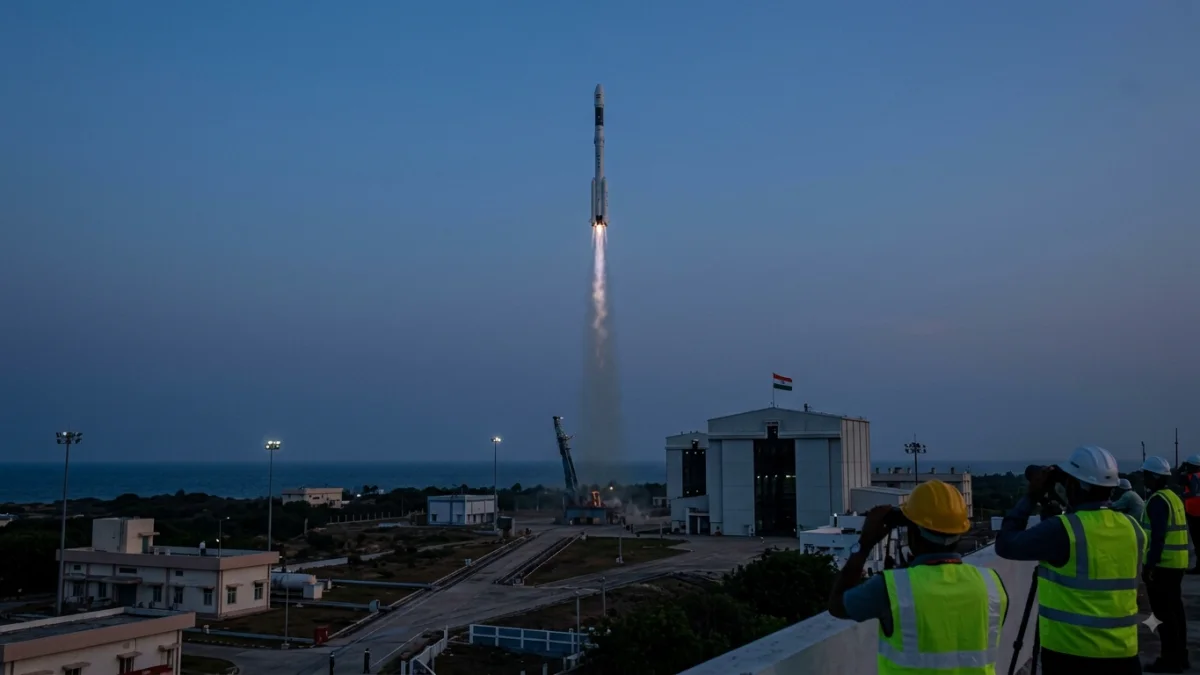


SRIHARIKOTA — India’s private space sector reached a historic milestone in July when Skyroot Aerospace’s Vikram-1 became the country’s first privately developed orbital rocket to reach space and place payloads into low Earth orbit on its debut flight.
The four-stage rocket lifted off from the Satish Dhawan Space Centre in Sriharikota on July 18, completing Skyroot’s first orbital mission, known as Aagaman. The company said Vikram-1 performed its final burn and injected its payloads into an orbit about 450 km above Earth.


The mission marked the first time an Indian private company had independently developed and launched an orbital-class rocket, expanding India’s launch capability beyond the state-run Indian Space Research Organisation (ISRO). India’s private space industry was opened to greater participation after government reforms in 2020.
Skyroot, a Hyderabad-based startup founded in 2018 by former ISRO engineers Pawan Kumar Chandana and Naga Bharath Daka, had previously launched Vikram-S in November 2022. That mission was India’s first privately built rocket flight but was suborbital and did not achieve orbit.
Vikram-1 carried technology-demonstration payloads, including Skyroot’s SCOPE satellite and payloads from Indian and international companies. The mission was intended to demonstrate the rocket’s orbital capabilities while providing data for future flights.
Indian officials welcomed the achievement as a milestone in the country’s commercial space ambitions. Union Minister of State for Science and Technology Jitendra Singh said the successful launch demonstrated the potential of India’s private space industry and credited the country’s policy changes for enabling greater private participation.
The achievement also places greater emphasis on Skyroot’s ability to repeat successful launches and transition from demonstration missions to commercial operations. The company has said it plans further Vikram-1 flights, while its larger Vikram-II rocket is scheduled for launch in 2027. Skyroot says Vikram-II is designed to carry up to 900 kg to low Earth orbit and use a cryogenic engine.
The Vikram-1 success comes as India seeks to expand its commercial space sector and attract private investment alongside ISRO’s government-led launch and exploration programmes. Skyroot’s first orbital flight provides the sector with an operational demonstration, while future missions will determine how quickly the company can establish a reliable commercial launch service.